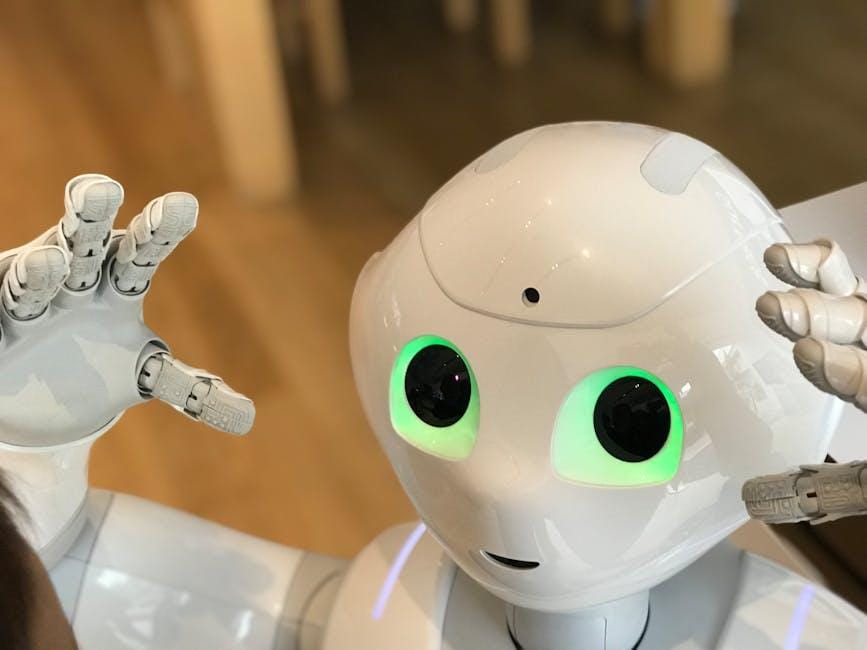
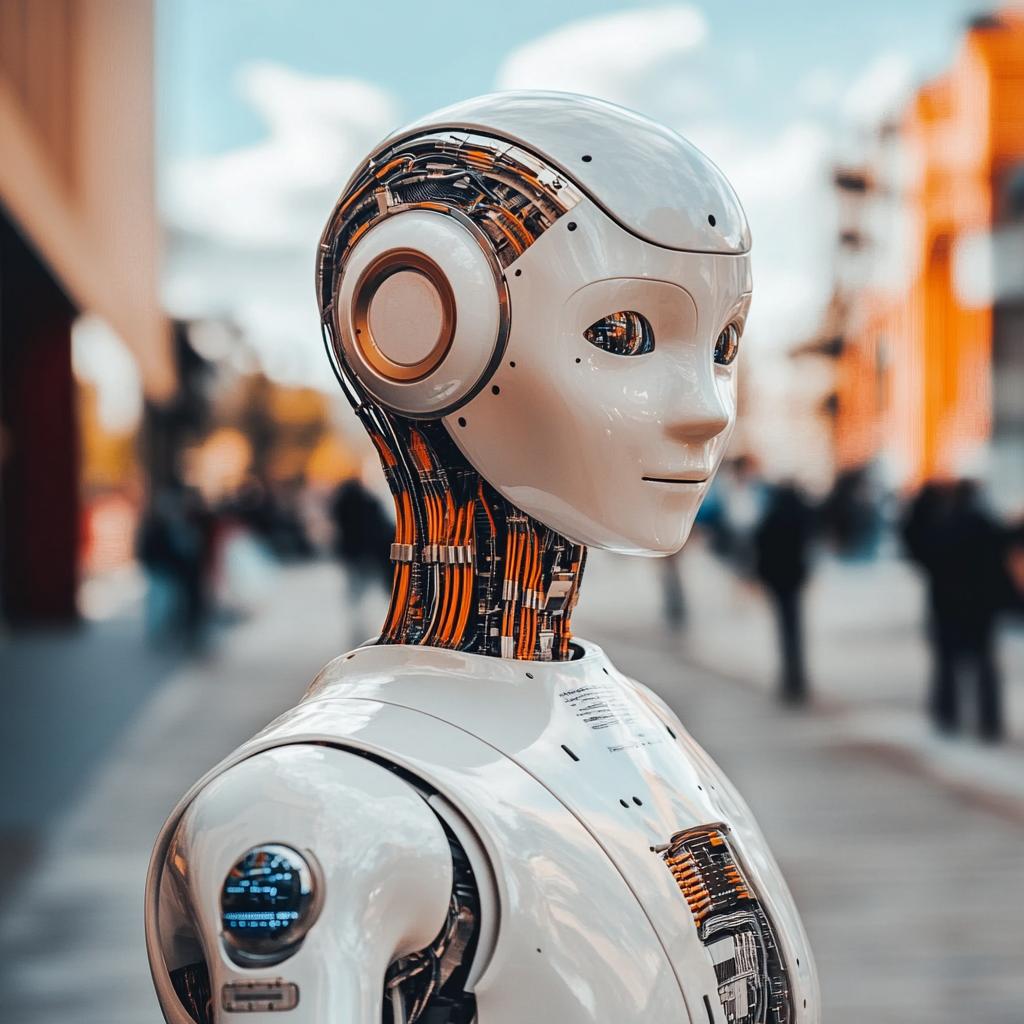
In the complex and vibrant world of technology, artificial intelligence has emerged as a new and transformative force. This technology, which has the ability to understand and analyze diverse digital data, allows systems and computers to extract deep meaning from images, videos and other visual input and take intelligent actions based on this information. [[2]]. From recommender systems that provide personalized experiences to sophisticated image editing without the need for professional skills, AI has made a new world of possibilities available to everyone. [[3]]. In this article, we will take a pleasant journey in the mysterious and dynamic world of artificial intelligence, and by examining the learning process and its different models, we will try to open a new window towards understanding this technology. [[1]].

Analysis of the evolution of artificial intelligence in the last decade
Over the past decade, there have been significant developments in the field of artificial intelligence (AI), including deep learning technologies, natural language processing, and intelligent robotics. Deep learning, as a branch of machine learning, by using multi-layer neural networks, has advanced the power of data analysis and prediction to a new level. These improvements also lead to improved performance in Image recognition, Medical data analysis and Voice recognition has been Other notable innovations include tremendous advances in technology Natural language processing He pointed out that it allows machines to analyze and generate texts and speech more accurately.
One of the other important innovations, Intelligent robotics which has caused major changes in various industries including production, health and services. Robots that have the ability to learn and adapt to the environment have greatly helped to increase productivity and reduce errors. In the same period of time, the use of artificial intelligence in Automotive industry It has also taken a big step forward with the development of self-driving cars and driver assistance systems. Recent successes in this field are not only limited to technical progress, but it can be seen that artificial intelligence has become an integral part of everyday life We have evolved, from voice assistants in homes to suggested services on online shopping platforms.
Artificial intelligence and its impact on different industries
Artificial intelligence has had a wide impact on various industries and has been able to facilitate and optimize complex and time-consuming processes. in the area Medicine and healthArtificial intelligence algorithms are able to diagnose diseases early, analyze medical images and provide accurate treatment solutions. Also, in Automotive industryArtificial intelligence has helped the development of self-driving cars and intelligent safety systems, which results in higher security and efficiency. in Marketing and advertising Also, data analysis and consumer behavior are done more accurately and more effective and personalized strategies are presented.
The following table shows some of the major effects of artificial intelligence in different industries:
| industry | Effects of artificial intelligence |
|---|
| medicine | Early diagnosis of diseases, analysis of medical images, precise treatment solutions |
| automobile manufacturing | Development of self-driving cars, intelligent safety systems |
| Marketing and advertising | Data analysis, personalization of strategies |
Artificial intelligence is also in Manufacturing industriesIt has made it possible to optimize the supply chain and produce higher quality products. employment Intelligent robots In production lines, it reduces human errors and increases productivity. in Financial and banking sectorData analysis algorithms are used to predict market trends and detect suspicious transactions. Education and research It has also facilitated the interactive learning experience and the cultivation of talents by using intelligent systems.
Challenges and opportunities ahead in the world of artificial intelligence
The use of artificial intelligence in everyday life has brought countless opportunities, but it has also created new challenges. Opportunities ahead It includes improving the efficiency in various industries and services, improving the quality of life and creating new jobs in the field of technology. Artificial intelligence can help solve complex problems that humans struggle with. For example, in the field of healthcare, AI systems can diagnose diseases and even treat them more accurately. Also, in the field of education, creating intelligent learning systems can facilitate and optimize the learning process.
on the other hand, Challenges ahead They are far more complex and sensitive. One of the biggest concerns is the ethical and privacy issues raised by the widespread use of AI. Security concerns, social and economic impacts due to the replacement of jobs and intelligent decision makers are also important. Also, the need to set coherent and transparent rules and regulations for the use of artificial intelligence is essential. The absence of global standards and the occurrence of unfair competition between countries can lead to more serious issues. The table below summarizes some of the most important opportunities and challenges:
| Opportunities | Challenges |
|---|
| Improving efficiency in industries | Moral issues |
| Improving the quality of life | Privacy concerns |
| Create new jobs | Security challenges |
| Solving complex problems | Socioeconomic effects |
A strategic guide to implementing artificial intelligence in small and large businesses
Today, artificial intelligence is known as one of the powerful tools to optimize processes and increase productivity in businesses. It doesn't matter if the business is small or big, implementing artificial intelligence can bring great results. Small businesses They can use tools such as Chat bots To improve customer service and Demand forecasting use, while Big companies They can take advantage of extensive and complex data analysis to make more accurate and strategic decisions. Other benefits of artificial intelligence in businesses include the following:
- Improve customer experience: Providing personalized services and immediate response to customers' needs
- Reduce costs: Automation of repetitive processes and reducing the need for manpower
- Increase accuracy: Detailed analysis and prediction of cases that are not possible manually
- Smart decision making: Exploitation of data analysis for strategic and long-term decisions
To successfully implement artificial intelligence, it is necessary for businesses to a Specific road map and Documented strategy be equipped This roadmap should include the following steps:
- Defining goals and requirements
- Examining the available technologies and choosing the most suitable ones
- Education and empowerment of the workforce
- Test and evaluate the results
- Final implementation and continuous improvement
| stage | Description |
|---|
| Definition of goals | Determining the need for artificial intelligence based on business goals |
| Review of technologies | Study and compare different artificial intelligence tools available in the market |
| Employee training | Holding training courses for employees to improve their skills |
| Testing and evaluation | Initial testing of projects and evaluation of results |
| Final implementation | Full project implementation and performance monitoring |
Related questions
Questions and answers about the article "Artificial intelligence: a new world in the sphere of technology"
Question 1: What does artificial intelligence refer to?
Answer: Artificial intelligence, or AI for short, refers to systems and algorithms that are able to perform tasks that normally require human intelligence. These tasks include learning, reasoning, problem solving, and decision making.
Question 2: What changes can be expected from artificial intelligence in the future?
Answer: Artificial intelligence can create huge changes in many fields, including medicine, transportation, communication, and even art. It is expected that with the further development of this technology, new capabilities for data analysis, disease diagnosis, self-driving cars, and even creating music and paintings will emerge.
Question 3: How can artificial intelligence help improve our daily lives?
Answer: Artificial intelligence can improve everyday life by automating activities and providing smarter solutions. For example, smart home systems can optimize energy consumption, virtual assistants can manage daily tasks, and automatic translation tools can facilitate international communication.
Question 4: Does artificial intelligence also face challenges?
Answer: Yes, AI faces many challenges, such as ethical issues, privacy and data security, as well as concerns about automation-induced unemployment and potential economic impacts. These issues require careful investigation and regulation of appropriate laws and regulations.
Question 5: What can be the applications of artificial intelligence in medicine?
Answer: Artificial intelligence in medicine can have a wide range of applications, including diagnosing diseases with high accuracy, suggesting personalized treatments based on patient data, and even assisting scientific research by analyzing big data and predicting clinical outcomes.
Question 6: What is the role of education in the development of artificial intelligence?
Answer: Education plays a vital role in the development of artificial intelligence, because the training of experienced specialists and research in the field of algorithms and models of artificial intelligence are the foundations of developments in this field. College education, specialized courses, and online programs all help develop the necessary knowledge and skills.
Question 7: Can artificial intelligence replace humans?
Answer: While AI can perform many tasks much better and faster than humans, the complete replacement of humans is far from a reality. Artificial intelligence serves as a tool to increase efficiency and help humans, but human sensory, emotional and creative abilities remain unmatched.
Question 8: How can artificial intelligence be used effectively?
Answer: Optimal use of artificial intelligence requires a comprehensive and responsible approach. This includes formulating appropriate strategies for development and implementation, creating the necessary infrastructure, ensuring data protection and privacy, as well as training and preparing human resources for constructive interaction with this technology.
Summary
Finally, artificial intelligence, as one of the important and transformative phenomena in the field of technology, has opened a new way to interact with the world around us. This technology, with its many capabilities, including learning, perception and decision-making, allows us to go beyond the traditional boundaries of human knowledge and capabilities.
Considering the speed of progress and the wide range of artificial intelligence applications, as well as the various ethical and social issues that result from these developments, our role in guiding and controlling this technology is very vital. Undoubtedly, the period we live in is a unique opportunity to build a better and smarter future.
Let's think smarter together and take strong steps to improve and facilitate human life so that we can take advantage of the countless opportunities and wonderful advances that artificial intelligence brings.
To read more about artificial intelligence and its new developments, you can refer to reliable pages and resources, including the following links:
– Artificial intelligence - Wikipedia
– Making AI helpful for everyone – Google AI
– Artificial intelligence - Wikipedia, the free encyclopedia